
Are Students Safer Without Cell Phones?

What districts see when phones are away: calmer emergencies, kinder hallways, sharper focus.
School safety is the heartbeat of district conversations right now. Families want reassurance, educators want clarity, and leaders want a plan that works at scale. One practical lever districts are pulling—with strong results—is removing cell phones during the school day. Not to block communication, but to reduce chaos, improve focus, and make emergency response faster, quieter, and more coordinated.
This post distills insights from multiple Yondr partner school leaders who’ve lived the work:
Steve Chatterton, retired police captain and Director of Security, Greece Central School District (NY), who helped lead a districtwide rollout across 17 buildings.
Amanda Bueno, Principal, Charles O. Dewey MS 136 (Sunset Park, Brooklyn), who navigated a real lockdown one week after launch.
Don Zesiger, former Director of School Safety, Akron Public Schools (OH) and FBI National Academy graduate, who oversaw a districtwide phone-free policy and reports calmer lunchrooms, fewer recorded conflicts, and stronger teacher support under a uniform standard.
We’ve paired their on-the-ground experience with current guidance and research so you can share a clear, credible safety narrative with boards, staff, and families.
Why a Structured Phone-Free Day Improves Safety
1) Emergencies require calm, not crowd-sourced confusion.
In a crisis, the safest thing students can do is follow adult direction, stay quiet, and move as instructed. Mass calling, texting, or posting can clog networks, fuel rumors, and pull attention from directives. Standard reunification frameworks (e.g., the Standard Reunification Method) warn that uncoordinated parent arrival complicates incident command—hence the need to pre-plan and communicate reunification steps in advance.
2) The fear is real—but the risk is still rare.
Leaders can acknowledge family fear while sharing the data: school shootings, while devastating, remain statistically rare relative to the 50+ million students who attend school daily. Clear, practiced procedures (not open texting) drive safer outcomes. The Washington Post
3) Phones escalate day-to-day safety issues.
Filming fights, posting “call-outs,” and rapid rumor cycles during the day increase conflict, bullying, and anxiety—even when actual risk is low. Recent public-health findings using 2023 YRBS data link frequent social media use with higher bullying exposure and worse mental-health indicators among high-school students.
4) Learning improves when phones go away.
UNESCO highlights evidence that phone proximity alone can degrade concentration, and that it can take up to ~20 minutes to fully refocus after a distraction; bans have been associated with improved outcomes, especially for lower-achieving students. UNESCO
“The goal isn’t to cut off communication; it’s to sequence it—staff coordinate with EMS/law enforcement while students listen for directions first, then reconnect with families once it’s safe.”
—Don Zesiger, former Director of School Safety, Akron Public Schools (OH)
How phones can hinder emergency response (distraction, network overload, noise risk, online tracking), plus ways schools sequence communication and unlock safely.
How a Phone-Free School Day Reduced Conflict and Bullying
“Discipline referrals have dropped. Physical altercations and bullying incidents have sharply declined.”
— John Harris, educator and school board member, writing in CT Mirror on Connecticut phone-free schools
Read the full CT Mirror article — Connecticut phone-free schools
What changed:
Fewer conflicts: Students had less opportunity for digital arguments or rumors to escalate.
More face-to-face interaction: Students engaged more directly with peers and teachers.
Improved daily routine: Teachers reported smoother transitions and calmer classrooms.
Why it matters:
Safer schools are not only about crisis response—reduced daily incidents and stronger relationships create calmer environments where students and staff feel more secure.
What Students Noticed First
Based on the Q&A with Principal Amanda Bueno (Brooklyn) and Director of Security Steve Chatterton (Greece, NY)—and echoed by teachers across their campuses—students consistently reported:
They feel safer in shared spaces. With fewer phones out, there are fewer “gotcha” recordings in hallways and the cafeteria. Students described eating lunch without worrying about being filmed and getting “a break from performing.”
Less in-day bullying pressure. Without in-school filming and posting, conflict doesn’t spiral online while students are still on campus. (Leader testimony; see CDC trends on bullying exposure for broader context.)
More time on task. Teachers observed whole classes staying focused for longer—some for the first time in years—because the constant pull to check, post, and compare is gone. (Leader testimony; see UNESCO on attention costs.)
“It’s night and day. Incidents aren’t recorded and recycled for days, and classrooms are actually… class again.”
— Steve Chatterton, Director of Security, Greece Central School District (NY)
What a Real Emergency Looked Like—One Week Into Yondr
Sunset Park, Brooklyn (April 12, 2022)
Charles O. Dewey MS 136 had implemented the Yondr Phone-Free Schools Program just a week earlier. That morning, a mass shooting at the nearby 36th Street subway station triggered a shelter-in-place on campus (see the U.S. DOJ press release).
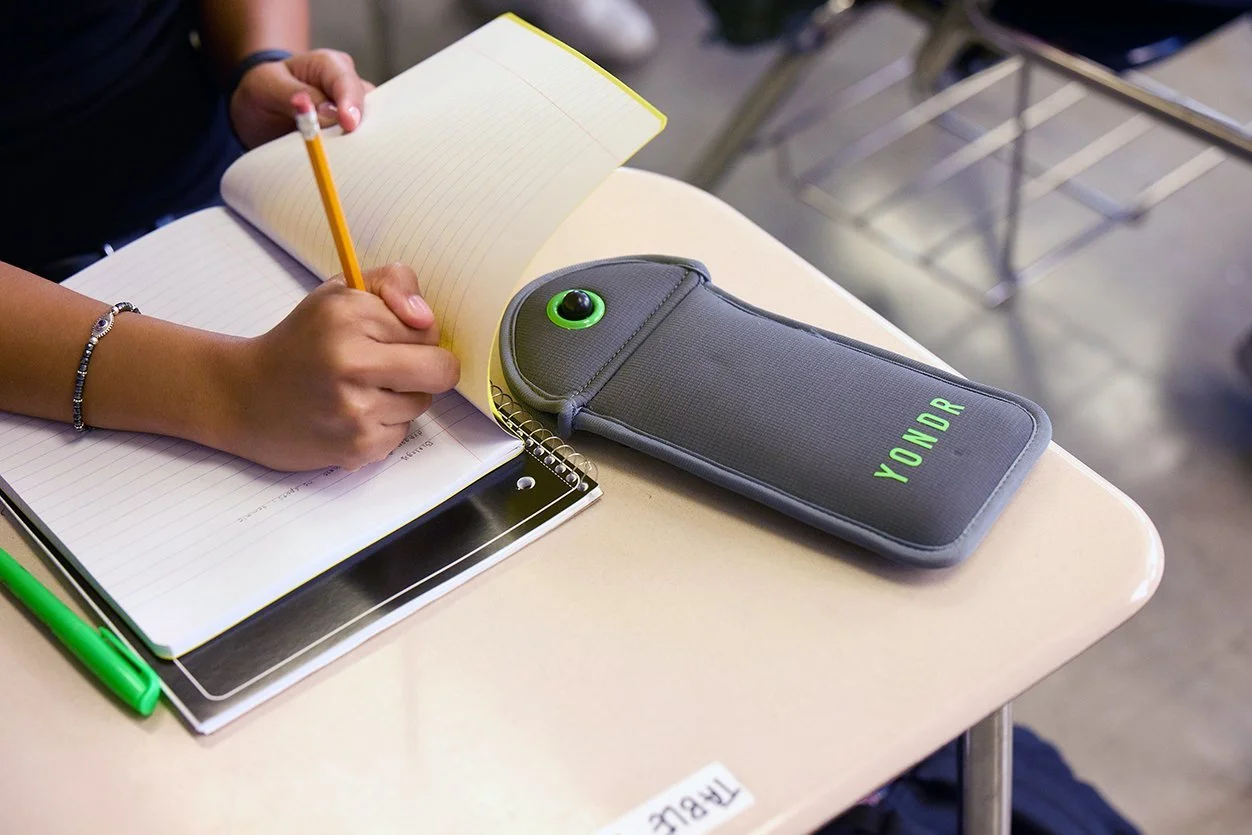
Because students’ phones were secured in Yondr pouches, leaders could push verified updates to families through school channels—without a swirl of student texts, posts, or rumor cascades. Classrooms stayed quiet and orderly. Staff focused on accounting for students and coordinating with NYPD, not battling notifications. Once law enforcement cleared the area, the team went room-to-room about 30 minutes before dismissal and unlocked pouches so students could call home, coordinate safe routes (the subway was still closed), and reconnect with caregivers—in that order.
“It helped us streamline communication, maintain order, and minimize panic. Families told us afterward they felt more secure getting calm, consistent updates from the school.”
— Amanda Bueno, Principal, Charles O. Dewey MS 136
Why it mattered: the sequence worked as designed—safety procedures first, family communication next—with Yondr reducing noise and uncertainty during the most critical part of the day.
How Greece Central (NY) Made Phone-Free Safe—and Simple
District scale (17 buildings, ~11,000 students)
After weighing “off/away” rules (hard to enforce), Greece Central School District (NY) chose a Tier-1, everyone-everyday approach with Yondr to support safety procedures and keep classrooms calm.
What they did (fast): Board alignment, summer staff training, clear unlock points (AP/main office/nurse), and plain rules (if it’s visible, it’s a violation). A quick “reboot” in week three closed earbuds/burner-phone gaps.
What changed first (safety/climate):
Fewer recorded incidents; bathroom/cafeteria hotspots quieted.
Cleaner, consistent enforcement—less hallway conflict about phones.
Instructional calm—whole-class attention returned for longer stretches.s.)
“It’s a tool—not a silver bullet. But the climate shift is real.”
—Steve Chatterton, Director of Security, Greece Central School District
Why it matters for safety: A single standard reduced chaos during the day and supported emergency sequencing—procedures first, phones unlocked when safe—without making teachers the “phone police.”
Family Safety Question, Answered Plainly.
“What if there’s an emergency and I can’t reach my child?”
Priority in a crisis: Students follow adult directions first. Quiet, compliance, and movement as instructed come before personal calls or texts. iloveuguys.org
How families hear from school: The school—not students—sends verified updates via official channels (robocall/SMS/email) under the incident command structure (REMS TA Center—Family Reunification Annex).
When phones are used: Once it’s safe (e.g., law-enforcement clearance or dismissal), staff unlock pouches so students can coordinate pick-up or transit.
Health and access: Documented medical needs (e.g., diabetes monitoring) and counseling plans can include controlled access via the nurse or an administrator.
The aim isn’t cutting families off; it’s sequencing communication so safety procedures and accountable reunification come first—then student-family communication follows in a calm, organized way.
Implementation That Lasts (And Feels Fair to Students)
Make it Tier-1 (for everyone). One standard prevents loopholes and perceptions of unfairness.
Train for consistency. Same staff at the same entrances; APs, deans, nurses, and security aligned on unlock protocols and documentation.
Keep the “why” simple and student-centered. Phones are away so students feel safer (no random recording), bullying pressure drops, and learning time is protected.
Expect a light “reboot.” Around week three, close gaps (earbuds, burner phones) and refresh expectations.
Pair policy with culture. Small touches—like letting students personalize their pouches—signal respect and build buy-in.
Talking Points You Can Adapt for a Board or Family FAQ
Emergency calm: Phone-free classrooms reduce rumor spirals and keep attention on staff directions. iloveuguys.org
Student comfort: Fewer hallway/cafeteria recordings; students report feeling safer coming to school and more comfortable at lunch (leader testimony; aligns with CDC bullying concerns.)
Learning time: Proximity distracts; removing phones supports focus and achievement UNESCO
Fairness: A single standard is simpler to enforce and easier to understand.
Predictable access: Phones are unlocked by staff when it’s safe (e.g., before dismissal).
Documented exceptions: Medical and counseling plans can include controlled access.
Phone-free isn’t about limiting families—it’s about putting safety first so students can follow directions, reunification runs smoothly, and learning time feels calmer and more respectful. Districts that make it Tier-1, train consistently, and communicate clearly with families see the same pattern: quieter emergencies, kinder hallways, and sharper focus in class.
WANT TO JOIN OUR GLOBAL
COMMUNITY OF PHONE-FREE SCHOOLS?
To learn more about the Yondr Program, click below to request a free demo or consultation.
Yondr has offices in California, New York, Minnesota, London, and Sydney.