
“It’s the biggest policy review we’ve had in 20 years, but it is doable.” Inside a Wicklow school’s phone-free rollout
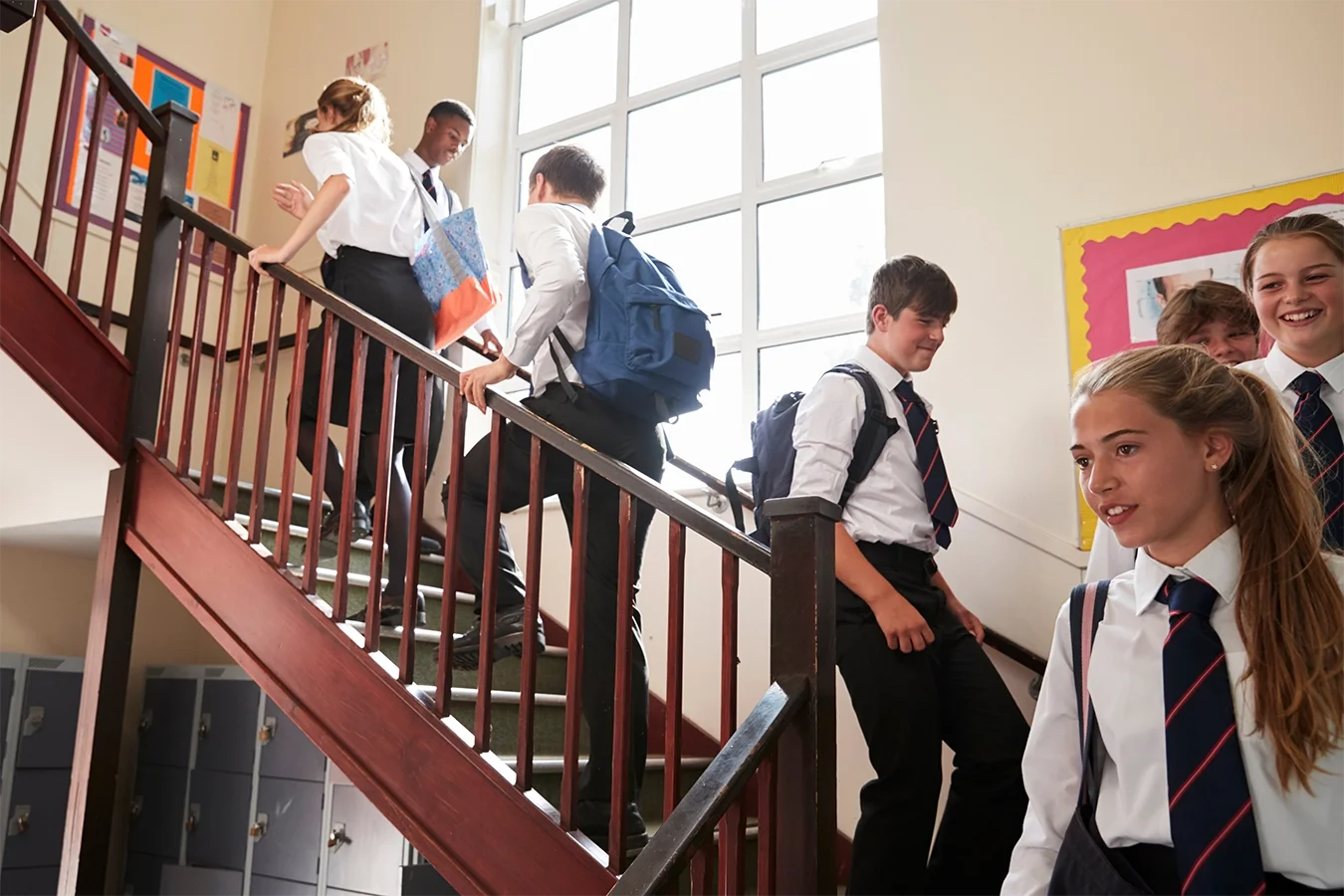
The first week back after the Christmas break always has its own energy. Students are catching up, staff are resetting routines, and the small habits return quickly.
In Bray, County Wicklow, Presentation College is using that reset moment to make a bigger shift: restricting mobile phone use during the school day, supported by Yondr pouches and a structured rollout plan. Local Wicklow coverage of the rollout offers a clear, on-the-ground look at how Irish schools are putting national guidance into practice.
LEARN MORE ABOUT PHONE-FREE SCHOOLS
•
LEARN MORE ABOUT PHONE-FREE SCHOOLS •
The hook isn’t the pouch. It’s the change.
Martin Locke, Principal of Presentation College Bray, described the move as “the biggest policy review we’ve had in at least 20 years.” He then added the line that matters most for every school leader considering the same shift: “but it is doable.”
That’s why this story resonates. It doesn’t pretend phones are a simple issue to solve. It reflects what schools live every day. Phones show up in corridors, at lunch, and at the classroom door. They’re part of the routine.
Locke put it plainly: for many teenagers, a phone can feel like an extension of themselves. That’s why the school didn’t treat this as a quick rule change. They treated it like change management. A mindset shift like this needs planning, communication, and support.
Buy-in wasn’t a checkbox. It was the strategy.
Phone policies don't usually fail because of the wrong intent. They fail because the day-to-day reality gets messy:
inconsistent enforcement from classroom to classroom
constant negotiation at the door
staff fatigue
student resistance
and, over time, erosion of the policy
Wicklow’s story shows a different approach. Before moving forward, Presentation College Bray focused on community buy-in. Staff, parents, and students were brought into the conversation early.
The parent survey results were especially telling. Parents weren’t vague. Large majorities said they were concerned about device time and distraction. Even more said they wanted students engaging face-to-face at break and lunchtime. When asked whether the school should introduce more robust measures to restrict phone use during the school day, the response was overwhelmingly supportive.
Locke’s framing mattered, too. The message wasn’t “phones are bad.” It was more practical than that: we understand the role of technology, but students need a break during the school day. The goal is wellbeing, focus, and healthier peer interaction.

Why this moment matters beyond Wicklow
Wicklow is one snapshot of a national shift already underway. In June 2025, the Department of Education issued national guidance on mobile phone use in schools, supported by €9 million in funding for post-primary schools to implement secure storage solutions (including pouches and lock boxes). The guidance aims to improve wellbeing, reduce risks such as cyberbullying and exposure to harmful content, and support more focused learning environments. Importantly, Irish post-primary schools can use this funding to partner with Yondr for phone pouches and rollout support.
At the same time, the national conversation has sharpened around how schools restrict phones. The focus is shifting away from simplistic “ban” language and toward approaches that reflect students’ needs and real school-day logistics. In September 2025, Ireland’s Ombudsman for Children’s Office (OCO) published One Size Does Not Fit All, urging policymakers and schools to move beyond one-size-fits-all bans and to consider children’s rights, student voice, and the diversity of school contexts.
Wicklow offers a practical blueprint within that nuance: restriction with structure, flexibility where appropriate (e.g., trips), and a consistent routine that doesn’t rely on constant confrontation.
One practical point worth calling out
One reason this specific coverage is so useful for Irish school leaders is that it shows what implementation looks like in real life. Presentation College Bray chose Yondr and is launching now. It’s not a concept or a future plan. It’s a school preparing staff, setting expectations, and moving forward with a routine that can hold up day to day.
For any school that’s heard mixed messages in the market about what is or isn’t possible, this is a real example of schools moving forward with programmes that are operationally realistic and designed for whole-school consistency.
With Yondr, it’s more than a pouch. It’s the programme that makes it sustainable.
Yondr pairs magnetically sealed pouches with programme infrastructure tailored to each school’s unique environment. The Yondr Program enables students to retain possession of their phones while transforming school days into opportunities for social, emotional, and academic growth:
Clear, customised policy development to support consistent, school-wide implementation
Built-in training and onboarding for staff, students, and parents
Secure, durable pouches that let students keep phones without the distractions
Fast, reliable unlocking infrastructure to support smooth operations
Ongoing strategic support to help ensure long-term success
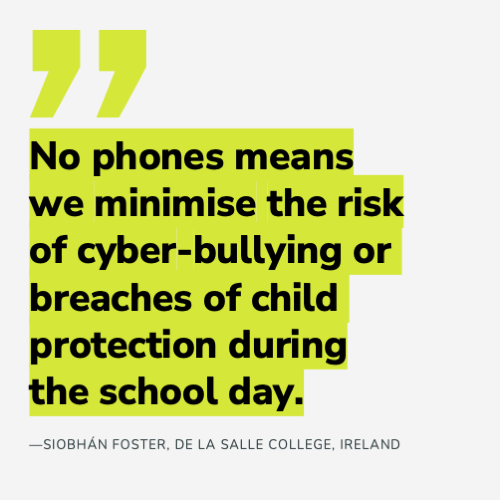
As one Irish educator put it:
Yondr in Ireland: proven, local, and built to last
Wicklow is a powerful story because it’s honest about the challenge and confident about the outcome. As the original pioneers of phone-free spaces, we’ve learned what makes adoption last. It’s not just the launch. It’s the routine that follows.
Proven Track Record: 11+ years of success creating phone-free learning in thousands of schools worldwide
Irish Market Experience: supporting Ireland’s largest and most prominent phone-free schools with a tailored product + programme solution, including Tallaght Community School (Dublin), Blackrock College (Dublin), Mercy Mounthawk (Kerry), and Dominican College (Wicklow)
100% Retention Rate in Ireland: Yondr has retained every school partnership in Ireland since market entry in 2021
Reliable supply chain + Irish warehouse: we ship millions of pouches and phone-free tools globally each year, with stock in hand to support large-volume orders within the Irish market
Inclusive whole-school approach: our goal is to build consistent routines school-wide, rather than singling out individual students or year groups (often the very students who need the most support to succeed)
Irish-based team: available to meet remotely or in person to support your rollout
If you’d like to see the full Ireland overview and outcomes, you can explore our ROI overview here: Explore our ROI Overview
Presentation College Bray’s story lands because it feels familiar. This is a big change. It takes buy-in, a mindset shift, and a plan that’s operationally realistic.
It is doable.
If your school is considering phone restriction and wants to talk through policy, routines, exceptions, staff readiness, and rollout planning, our Irish team is here to help.
Learn how Yondr supports phone-free schools or reach out to team@overyondr.com to discuss implementing the program at your school.