
Largest National Study to Date Confirms Yondr Phone-Free Schools Drive Sustained Gains in Student Well-Being and Teacher Satisfaction
New NBER Research Documents 80% Reduction in Classroom Phone Use in Yondr Schools
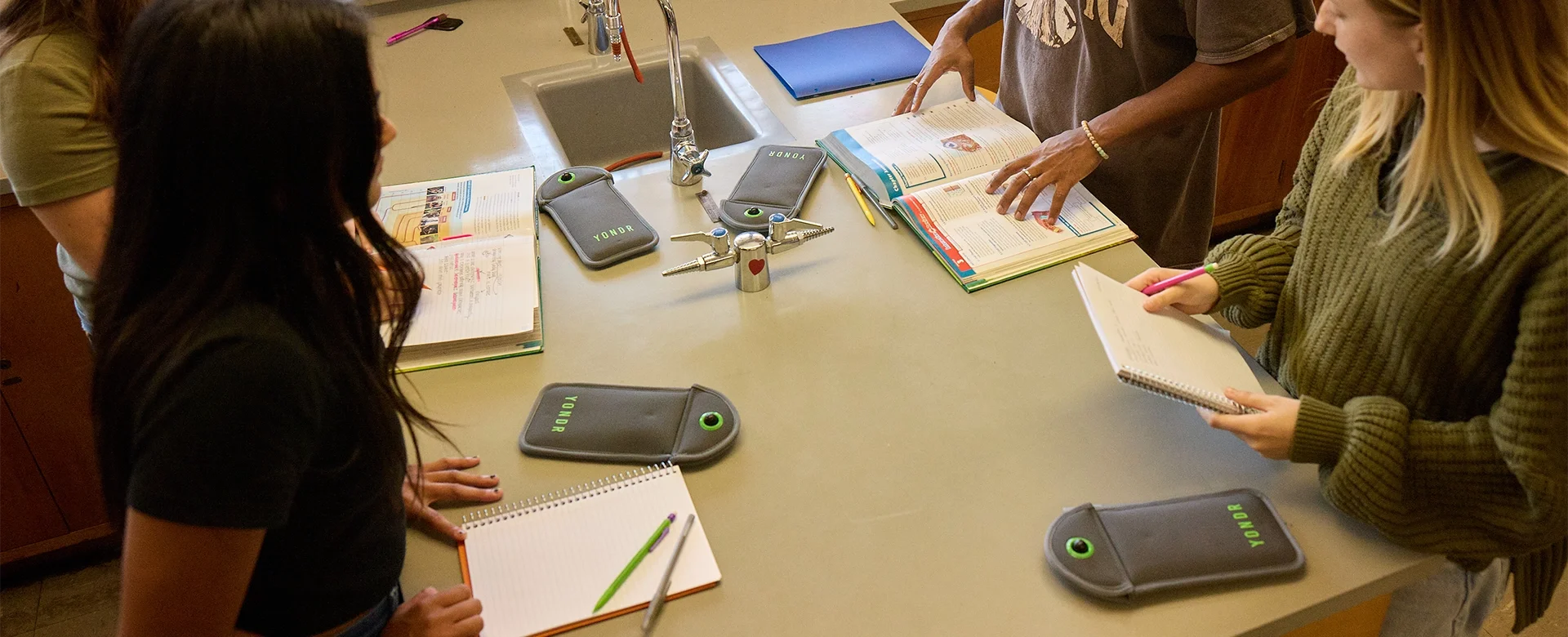
Los Angeles, CA; May 4, 2026 – A landmark study released today by the National Bureau of Economic Research, conducted by researchers at Stanford, Duke, the University of Pennsylvania, and the University of Michigan, confirms that Yondr phone-free schools drive significant, sustained improvements in student well-being, teacher satisfaction, and classroom focus. Drawing on data from over 40,000 schools between 2019 and 2026, this is the largest independent study of school cellphone bans ever conducted. The findings provide the strongest evidence to date that Yondr’s program meaningfully reduces phone use in schools, the foundation on which all other gains depend.
LEARN MORE ABOUT PHONE-FREE SCHOOLS
•
LEARN MORE ABOUT PHONE-FREE SCHOOLS •
Key findings from the study:
80% reduction in classroom phone use: The share of students using phones in class for non-academic reasons fell from 61% to 13% in schools using Yondr.
Yondr decreases phone use between classes 53 percentage points – nearly triple the reduction in non-Yondr schools that rely on ‘off-and-away’ policies alone.
Sustained student well-being gains: Within two years, students in Yondr phone-free schools reported well-being improvements approaching double those documented in major social media deactivation studies.
Improved teacher satisfaction with their school’s overall phone policy.



“This research is a meaningful milestone for Yondr and for every school working to create environments where students can focus, connect, and thrive,” said Graham Dugoni, founder and CEO of Yondr. “It reinforces what school leaders have been telling us for years: a phone-free school lays the foundation for calmer, more focused classrooms, where teachers feel supported and students have the space to develop the social skills needed in today’s world. We’re proud that a representative sample of our partner schools was the first to contribute to the largest independent study of its kind, and we’re committed to advancing that research as this work continues.”
Educators report that the most visible change in phone-free schools isn’t measured in test scores, but in connection. In Yondr schools around the world, teachers describe livelier cafeterias and hallways between classes as students interact more with their peers.

“At lunch you will see all these kids, they’re talking to one another,” said Brice Beck, Deputy Superintendent of Cape Girardeau Public Schools. “It’s a lot louder, but the good kind of loud.”
About the study:
The study was led independently by economists Hunt Allcott (Stanford), E. Jason Baron (Duke), Thomas Dee (Stanford), Angela Duckworth (University of Pennsylvania), Matthew Gentzkow (Stanford), and Brian Jacob (University of Michigan). Yondr provided anonymized implementation data from a selection of schools that enabled the team to compare Yondr schools and demographically similar schools without strict phone bans. While Yondr collaborated with the research team by sharing this anonymized data, the company did not fund the research, design the study, or review the findings prior to publication.
About Yondr
Founded in 2014 by CEO Graham Dugoni, Yondr pioneered the phone-free movement—initially in education and live entertainment, now growing in other spaces like recreation, workplaces, and hospitality. Today, Yondr’s phone-free school program supports more than 3 million students globally every school day.
Learn how Yondr supports phone-free schools or reach out to yasminbell@overyondr.com to discuss implementing the program at your school.
